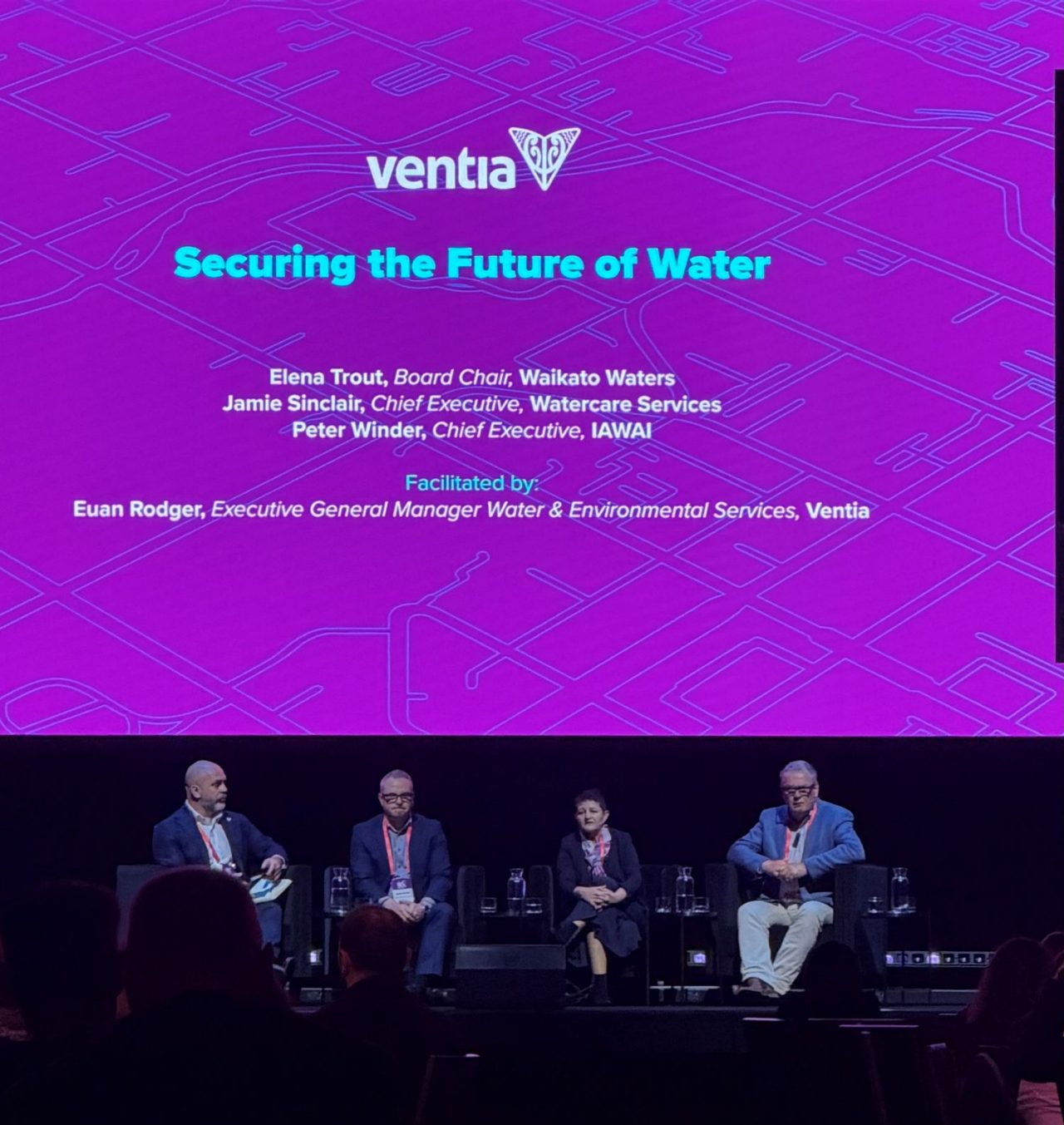
At Building Nations in Christchurch, Ventia Executive General Manager Water and Environmental Services Euan Rodger facilitated a panel on the future of water infrastructure, joined by Watercare CEO Jamie Sinclair, Waikato Water Board Chair Elena Trout and IAWAI CEO Peter Winder.  

One theme united them all: successful water investment depends on long-term thinking and a clear-eyed understanding of the whole-of-life costs of water assets.

“With the water reforms in full swing, there’s a lot of public debate about how aging infrastructure can be maintained or upgraded cost effectively in ways that cater for population growth, a changing climate, and future economic demands,” Euan said.

“Ventia has a workforce of more than 5,500 people in New Zealand, including many working on water infrastructure in the upper North Island, so Building Nations was a great place for us to bring an essential service provider’s lens to some of the topics discussed.” 
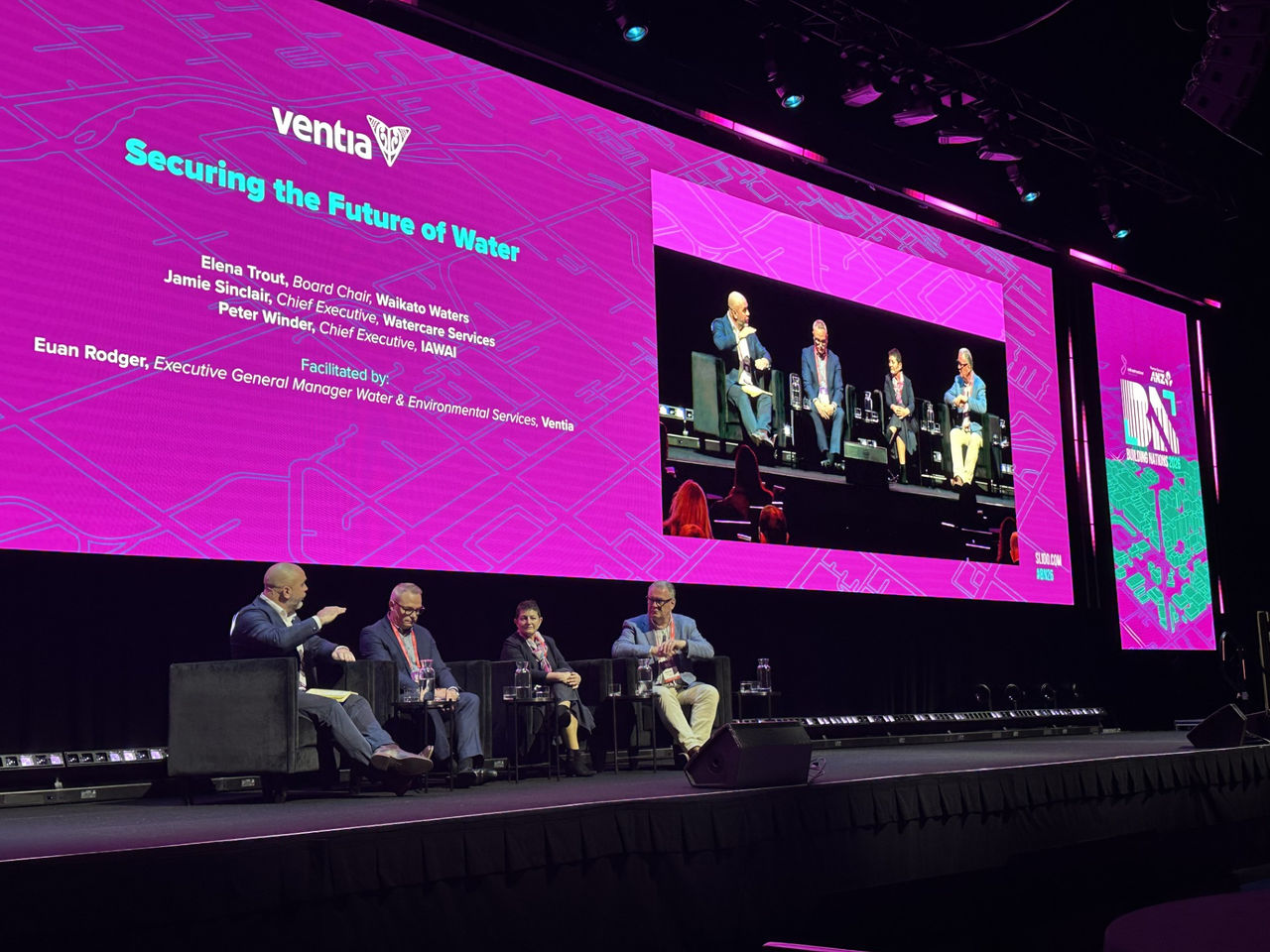
Water infrastructure leaders discussing New Zealand’s water future at Building Nations in Christchurch.

The challenge and opportunity of water reforms

The Local Water Done Well water reforms taking place across Aotearoa New Zealand were prominent throughout the panel discussion. New water entities are being stood up across the country, and many of them are at different stages of the journey – Watercare has existed for decades, while newer entities such as Waikato Waters and IAWAI began operations in July.  

Regardless of maturity, Euan said all of them were grappling with what the new formal economic regulation and consumer protection oversight by the Commerce Commission might mean for how they prioritised and procured water assets.

The reform process is a reset, and like any transition it will take time for new entities to establish their ways of working – but it also presents opportunities.

"Dedicated water entities looking after wider geographic regions could develop greater specialisation in water infrastructure while also collaborating on areas that made sense. That could include sharing learnings about how to cost-effectively deliver water for the best health, environmental and economic outcomes, or pooling resources to bring more buying power to bear through bulk purchasing agreements," Euan said.

Long term thinking is the vital ingredient

Amid that reset, one message came through clearly from every panellist: whatever structure the sector settles into, decisions made now need to hold up decades from now. Long-term thinking was at the heart of the discussion. 

“What impressed me was the unanimity amongst panellists that successful water investment requires long-term thinking and solutions communities have bought into, rather than quick fixes. 

“Ventia has vast experience in maintenance as well as capital works, and our experience is that the lower cost option to build isn’t always the one that turns out most cost-effective over a 50-year asset life, once maintenance, operations and eventual decommissioning are factored in.”

Securing the Future of Water panel discussion at Building Nations, Christchurch, New Zealand.

"Well considered water infrastructure could be a key driver of future economic growth by enabling new subdivisions, enterprise and employment. Effective planning could also save millions of dollars in future years by ensuring new facilities were designed with a changing climate and future population-growth in mind," Euan said.

“In Australia, one of the largest water infrastructure facilities Ventia operates is the Victorian Desalination Plant near Melbourne, which processes 150 billion litres of water a year. This facility was deliberately designed with room to expand to 200 billion litres if needed.

A similar approach has been taken in Northland where Ventia maintains and operates 17 water plants in partnership with the Far North District Council. Kerikeri Wastewater Treatment Plant was designed with future expansion in mind from day one, allowing for more capacity to be cost-effectively added when the town grows. 

“Forward planning and genuine engagement with the local community and mana whenua is what made that possible,” Euan said.

Data sharing and innovation can unlock more efficiencies

Because so much water infrastructure sits out of sight underground, the sector has historically had less asset performance data to draw on than sectors like transport or energy. That also makes it one of the areas where major gains could be made, Euan said

A shared national database of water infrastructure, built with data on how different materials and assets perform under different local conditions, could make a real cost-saving difference for asset owners and Kiwi communities. 

We are working with clients and using our own in-house project data to build similar databases across many of the infrastructure sectors we operate in. This is becoming incredibly valuable as it makes easier to accurately predict whole-of-life costs for new infrastructure and target maintenance routines more precisely.

New technology could also play a role in better delivery of future water infrastructure.

“Directional drilling can now tunnel water pipes under busy urban streets instead of digging them up, which can minimise disruption and reinstatement works and save significant money on traffic management.”

“At Ahipara, in Northland, we installed one of the country’s first super-critical UV treatment units, a cost-effective way of disinfecting wastewater to meet quality standards before discharge.”

Investing in people, not just pipes

Technology and data can only take the sector so far without the people to back it up. Panellists agreed that building New Zealand's long-term water capability also depends on developing and retaining the skilled workforce needed to deliver it. 

One of the keys to achieving that, Euan said, was communicating a consistent pipeline of work, giving contractors the confidence to invest in their people.

“Building capacity creates a snowball effect and ensures that every future project is delivered with more efficiency and know-how than the one that came before.”


More about Euan