The challenges across the water industry are familiar to us all, growing populations, climate change and skills shortages, all playing out in an environment of higher costs and budget constraints.  

“None of those challenges are new on their own. What’s different is that they’re all happening at once,” said Euan Rodger who is the Executive General Manager for Water and Environmental Services at Ventia.

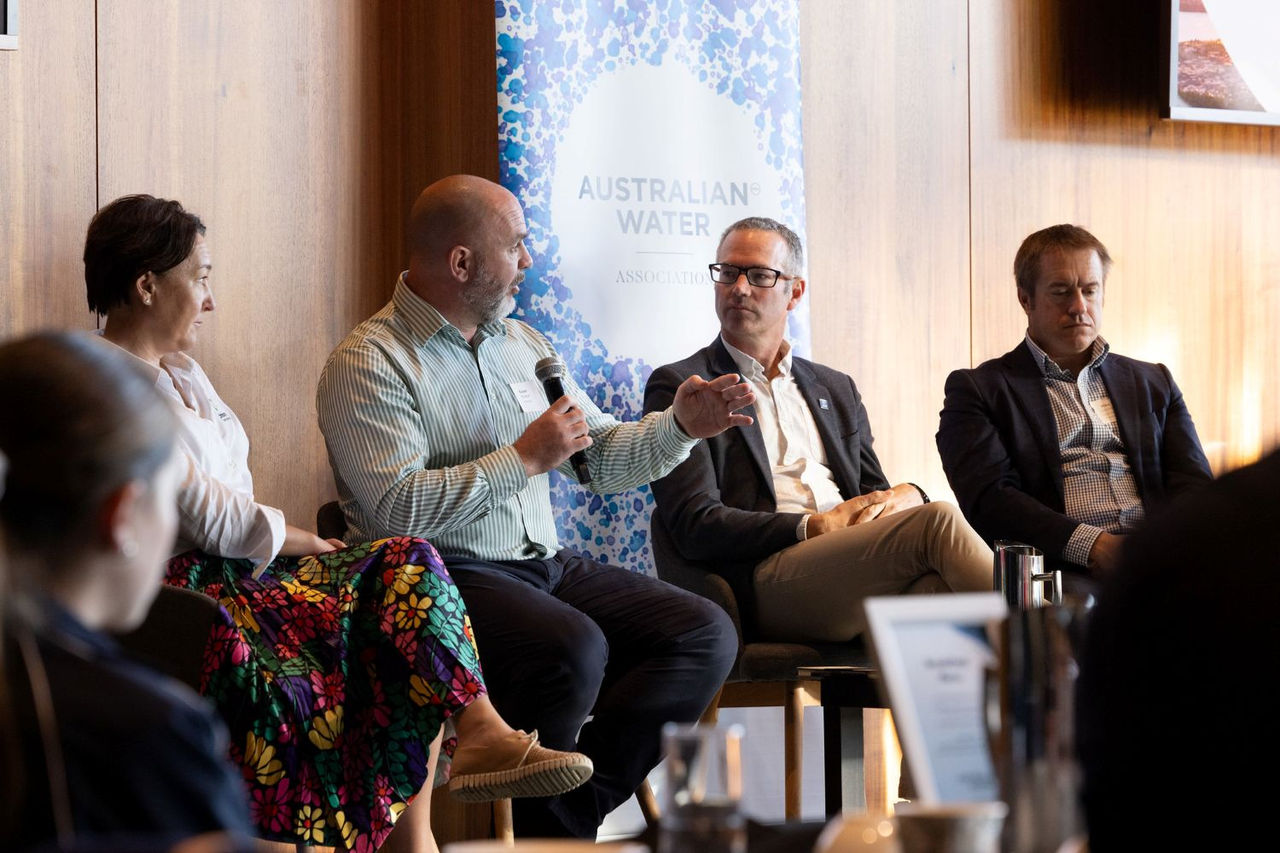
Euan recently spoke as part of an Australian Water Association panel in Tasmania where the discussion focussed around how the water industry can come together to meet ambitious policy goals, deliver critical projects and ensure it remains an attractive place for people to make a career.  

A long-term approach to projects

“We see a real opportunity to build stronger partnerships that help connect the planning, design, capital works and operations and maintenance,” Euan said.

Ventia works across all areas of the water asset lifecycle, so it’s natural to want to engage early and apply that knowledge to enable better outcomes.

We still see design decisions being made without full consideration of the costs of maintenance over their life. In constrained environments, that’s something the sector really can’t afford

“So that’s why we advocate for a bigger picture and longer-term view and that means having the right horizon for your decision making and having that joined thinking between maintenance, operations, capital expenditure and design.”

Local people doing local work

The competition for talent across industries remains a key issue for water leaders and policy makers. In this environment the industry must ensure its value proposition remains high.

“it’s an industry that delivers good outcomes for society,” Euan said.

There’s a real focus on sustainability on delivering value and being good citizens, the provision of clean drinking water is a fundamental requirement and so I think the industry values are strong and that is something people can get behind.

“We all need to talk about that more, how we’re supporting society, supporting local communities and looking after the environment.”

The support for communities is something that is also front of mind, infrastructure projects bring opportunity to regions, provided the focus is there. 

“When we have people based in local communities, working in local communities that is where we get the best outcomes and the best return on your investment,” Euan said.

“We have a model that is a combination of self-perform and subcontract and we will partner with local subcontractors. As an example in Tasmania, we have recently established a partnership with Water Industry Solutions (WIS) to support their ongoing development. 

“We do that elsewhere, where we engage with the local subcontractor market and also employ directly and by having the right approach and the right combination, we can support people by employing them directly in the local community and also the relevant subcontractors in the local area.”

This model, is now also able to be measured, thanks to the Australian Themes, Outcomes and Measures (TOMs) Framework, which was launched by the Australian Government in 2023, focusing on five core themes (Healthy, Secure, Sustainable, Cohesive, Prosperous) aiming for a holistic view of societal wellbeing.

It’s a model that Ventia has helped to pioneer across industries, including water, allowing participants to see where the benefits from projects are flowing. 

It’s increasingly important to be able to demonstrate the positive community impacts, such as local employment, First Nations participation, regional supplier development, skills pathways, decarbonisation, and community wellbeing.

“The TOMs framework allows us to put a tangible number next to the contribution we’re making in the communities where we operate and where possible to increase those benefits that are flowing back to the businesses and people in those regions.”