A significant milestone has been reached in one of the world’s most ambitious scientific endeavours, with the official opening of Ngurra-Maga, the SKA‑Low Central Processing Facility building on Wajarri Yamaji Country in remote Western Australia on 24 June 2026. 

Gifted the Wajarri-language name Ngurra‑Maga, meaning “home of the head”, the facility represents the on-site operational centre of the SKA‑Low telescope, one of two next‑generation radio telescopes being constructed by the Square Kilometre Array Observatory (SKAO) as part of a global scientific mission spanning 16 countries. 

Together with its counterpart in South Africa, SKA‑Low will enable scientists to explore some of the most profound questions in astronomy, from how the first stars and galaxies formed, to the nature of gravity and the origins of the Universe. 
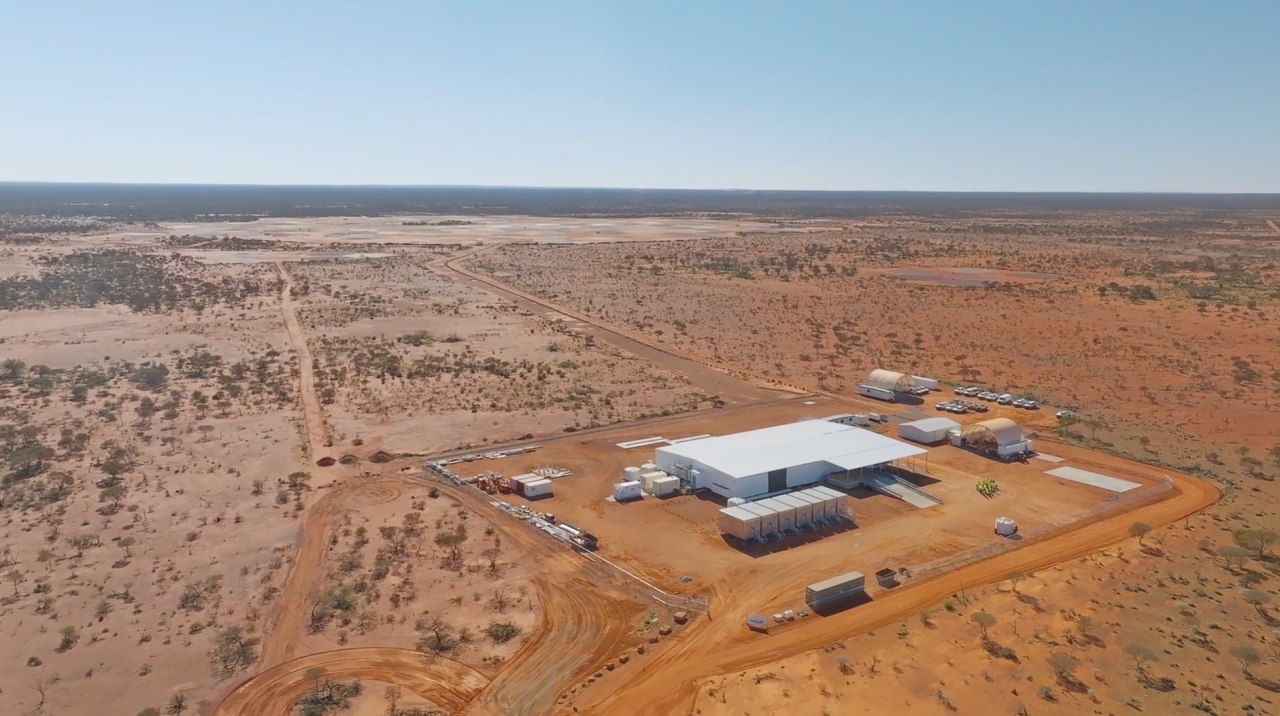
Pictured: Drone image of the finalised Central Processing Facility. The infrastructure will handle data volumes approaching one terabit per second, underscoring both the scale and complexity of the systems housed within the facility.

The “brain” of a global scientific instrument

The SKA-Low telescope is under construction at Inyarrimanha Ilgari Bundara, the CSIRO Murchison Radio‑astronomy Observatory, on Wajarri Yamaji Country in WA. Ngurra-Maga, the SKA-Low Central Processing Facility building has been purpose‑designed to house the advanced signal processing and on‑site supercomputing systems that power the telescope. 

Signals collected by the telescope’s vast array, ultimately comprising more than 131,000 antennas spread across 74 kilometres of remote terrain, will be transmitted through a high‑capacity fibre network to the facility for processing by high performance computers.  

From there, the processed data will be transferred to a supercomputer based in Perth and distributed to researchers around the world, enabling global access to insights derived from some of the faintest detectable signals in the cosmos. 

His Excellency The Hon. Christopher Dawson, Governor of Western Australia, officially opened the building with Wajarri Yamaji Elders Jennylyn Hamlett and Des Mongoo. As the Governor noted in his speech, this makes Ngurra‑Maga “the brain of the telescope”, a role that requires extraordinary engineering precision. 

Engineering for one of the most sensitive environments on Earth 

The SKA‑Low telescope operates within a protected radio‑quiet zone, where even the smallest levels of electromagnetic interference can compromise the scientific data being collected.  

To meet the challenge of shielding the telescope from the electronic ‘noise’ inside building, Ngurra-Maga has been constructed as a highly specialised, radio‑frequency‑shielded environment. Aurecon, working in conjunction with CSIRO and the SKAO, developed the building design concept for the facility. 

Ventia, together with its partners, the SKAO and incorporating building design contributions from CSIRO and Aurecon, developed a series of world‑first engineering solutions across the broader SKA‑Low infrastructure program, including precision‑engineered shielding systems and integrated power and fibre networks capable of supporting one of the most demanding digital environments ever built.

At full operation, the telescope’s infrastructure will handle data volumes approaching one terabit per second, underscoring both the scale and complexity of the systems housed within the facility. 

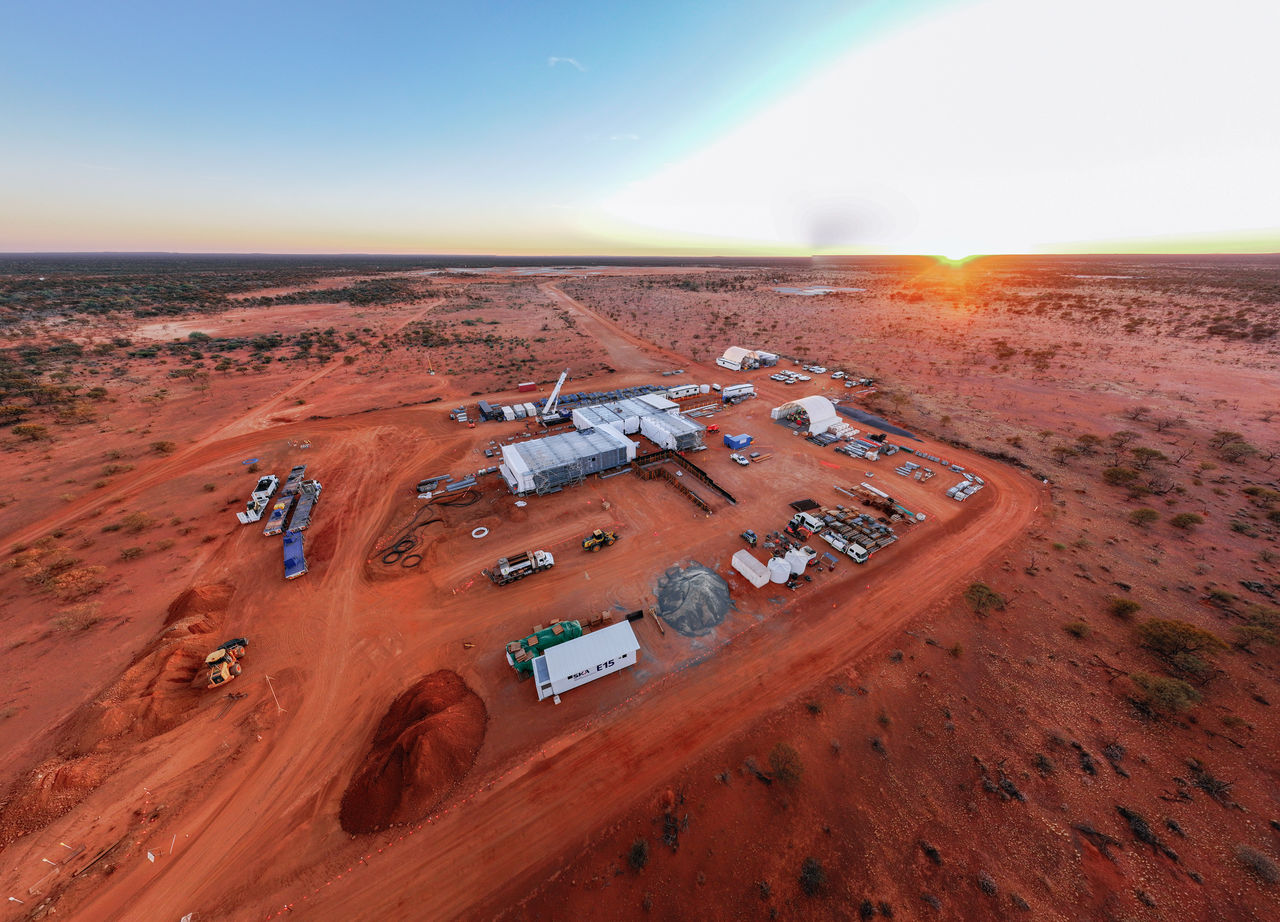
Pictured: Drone image of the Central Processing Facility under construction in early 2026.

Ventia’s role in delivering critical infrastructure 

As the SKAO’s principal infrastructure contractor in Australia, Ventia played a key role in bringing Ngurra‑Maga to life. 

Ventia’s scope encompassed the integrated design and construction of the Central Processing Facility and Remote Processing Facilities, alongside the power and fibre networks that connect the telescope array building on the SKAO’s foundational architecture and evolving its multidisciplinary design into a unified system.  

This work forms part of a broader infrastructure ecosystem, integrating more than 1,000 kilometres of fibre, extensive power distribution systems and precision‑engineered processing environments across one of the most remote locations in Australia.  

Delivering infrastructure at this scale and level of technical precision has required close collaboration with SKAO, CSIRO – Australia’s national science agency, Aurecon and a global network of specialist partners, as well as rigorous quality controls to meet stringent scientific performance requirements. 

The result is infrastructure that not only supports the telescope’s immediate operation but provides the long‑term reliability, scalability and performance required for decades of scientific discovery. 

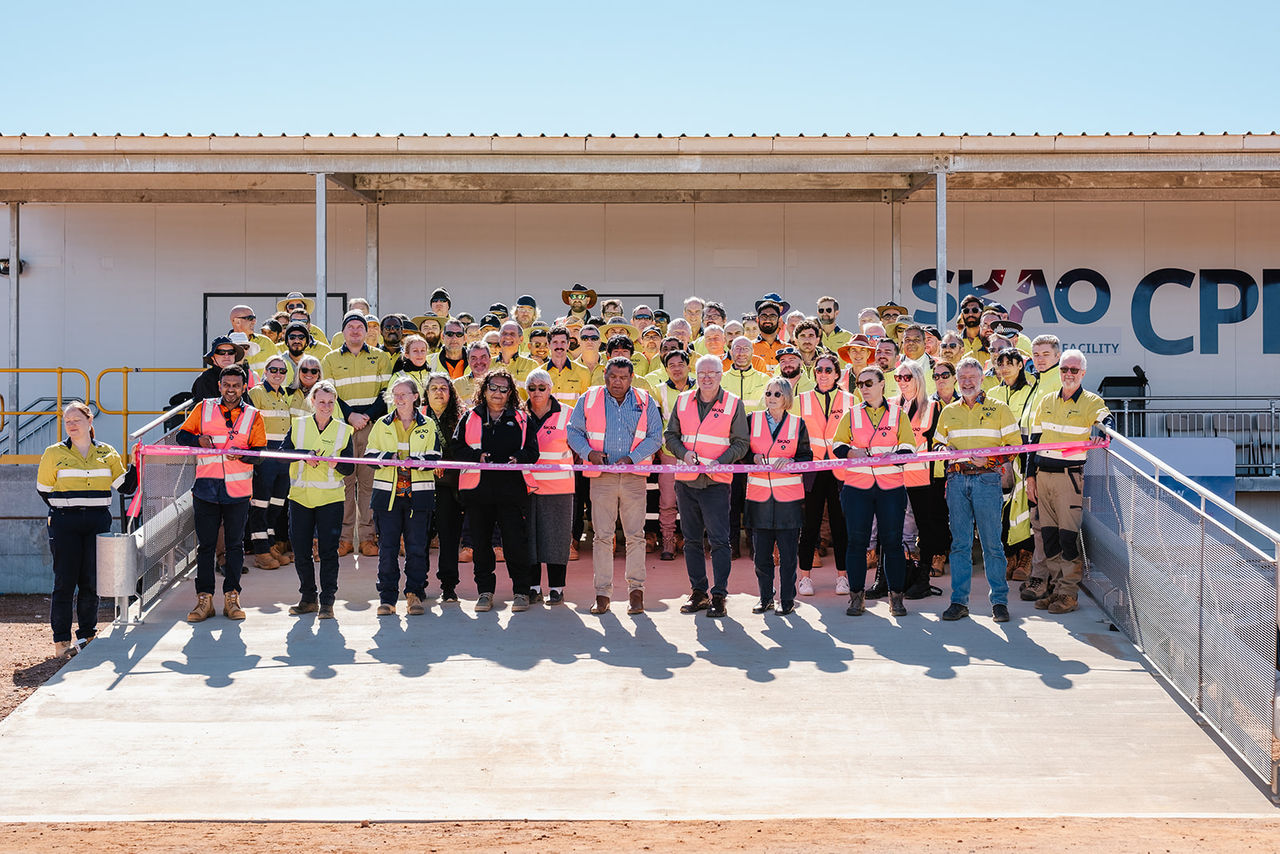
Pictured: State Government officials and Wajarri Yamaji representatives cut the ceremonial ribbon in front of the CPF building Ngurra‑Maga (“the brain of the telescope”), alongside SKAO, CSIRO, Aurecon and Ventia executives and team members.

Enabling a new era of discovery 

The opening of Ngurra-Maga, the SKA-Low Central Processing Facility marks a significant step forward for the project, with the SKAO already beginning to deliver early scientific results from the telescope. 

As SKA-Low continues to expand in phases, Ngurra‑Maga will play a central role in processing and enabling the data that will drive future discoveries. 

For Ventia, the project represents more than an engineering achievement, it is a demonstration of how complex infrastructure, global collaboration and local partnerships can come together to support scientific progress on a truly global scale. 

By contributing to the infrastructure underpinning SKA‑Low, Ventia is helping to enable a facility that will transform our understanding of the Universe and position Australia at the forefront of one of the most significant scientific endeavours of our time.