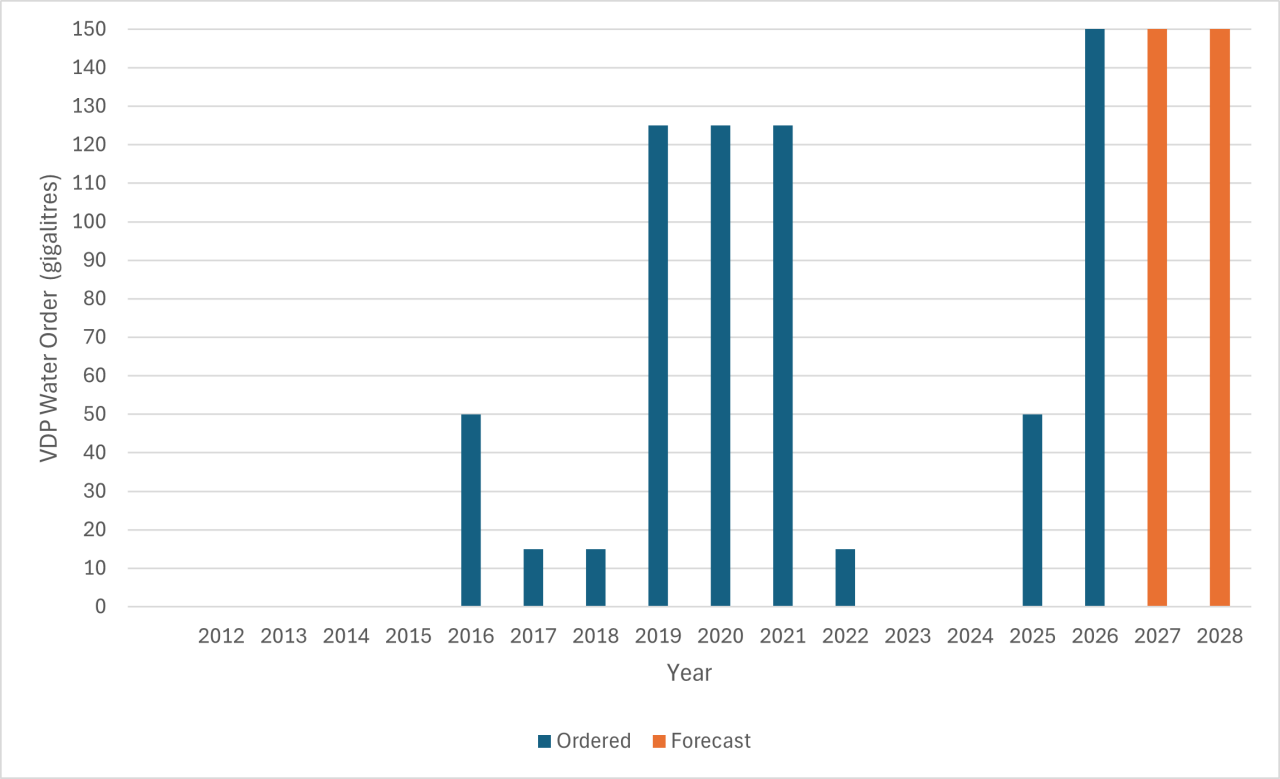
When the Victorian Desalination Plant was completed in 2012 Melbourne's water storages were more than 80% full, and for the first four years of operation it was not required to produce at all.

Between 2017 and 2025, the plant delivered more than 500 gigalitres. In April 2026, the Victorian Government announced a 150 gigalitre water order, activating the plant at its full design capacity for the first time. This was in response to reservoir levels in 2025 recording their steepest annual decline since the Millennium Drought.

This moment marks more than a milestone for the plant itself. It underlines why the Victorian Desalination Plant exists: to protect water security for Greater Melbourne and regional Victoria when rainfall alone cannot be relied upon.
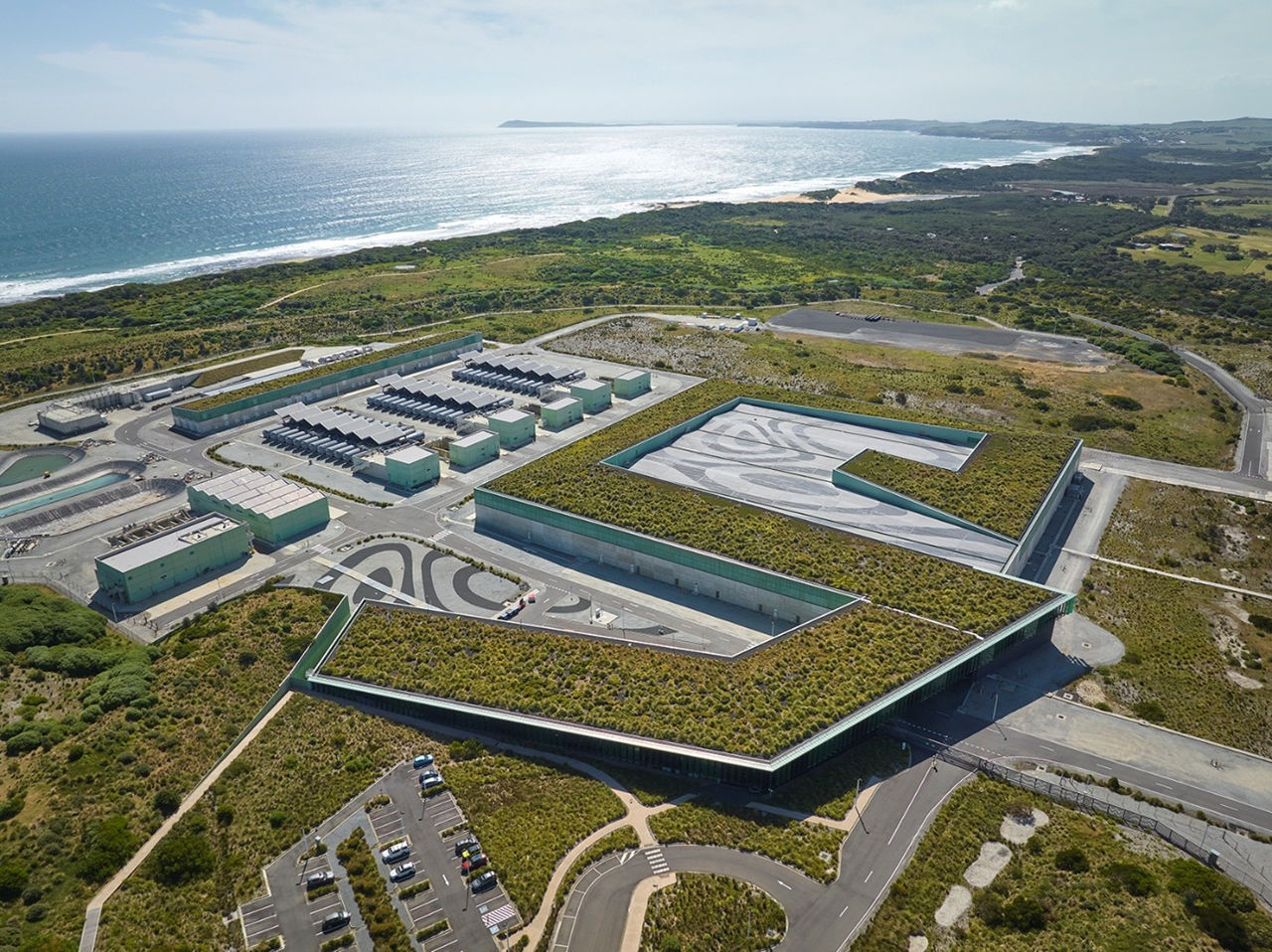
The Victorian Desalination Plant (source Watersure)

Learning from the past

The desalination plant was conceived during the Millennium Drought, when Melbourne’s water storages fell to critically low levels and traditional reliance on rainfall‑fed reservoirs was exposed as a vulnerability. Climate variability, population growth, bushfire risk and extended dry periods presented clear risks to Victoria’s water security.

The Victorian Government invested in the development of a desalination plant to secure a rainfall‑independent water source, capable of supplying up to one‑third of Melbourne’s annual water demand.

An asset like the Victorian Desalination Plant is built with a long-term view and in recognition of the fact that weather is unpredictable and infrastructure is needed to provide assurance that water will be available even when it’s not raining.


A long‑term partnership model

The project was delivered through one of the world’s largest water public‑private partnerships, with AquaSure, a private consortium responsible for designing, building, financing and maintaining the plant under a 30-year agreement with the State.

The plant was designed and constructed by the Thiess Degrémont Joint Venture, which consisted of Thiess Services (now Ventia) and Degrémont (a subsidiary of SUEZ specializing in water treatment). Upon completion, responsibility for the facility's operation and maintenance was assumed by Watersure, a joint venture established between Ventia and SUEZ.

Watersure is responsible for not only for producing water, but for keeping assets, people and systems in a constant state of readiness to be able to deliver water when required.

Why the plant is critical today

To date, the Victorian Desalination Plant has supplied more than 500 gigalitres of water. That’s about the same as the entire volume of Sydney Harbour or enough to fill 200,000 Olympic-sized swimming pools.

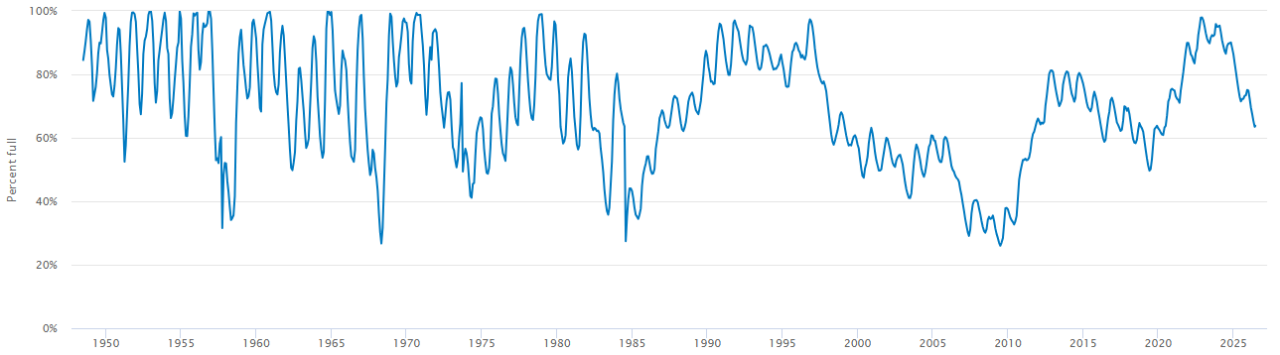
Modelling demonstrates that without the Victorian Desalination Project, current reservoir levels would be significantly less than the 64% they are today, putting the region at risk of severe restrictions and negative economic impact. 

The desalination plant doesn’t replace dams, it protects them. By supplementing storages during dry periods, it helps preserve buffer capacity and buys time in an increasingly volatile climate.

Melbourne Region Actual Reservoir Levels (source https://www.melbournewater.com.au/water-and-environment/water-management/water-storage-levels#/)

How it works

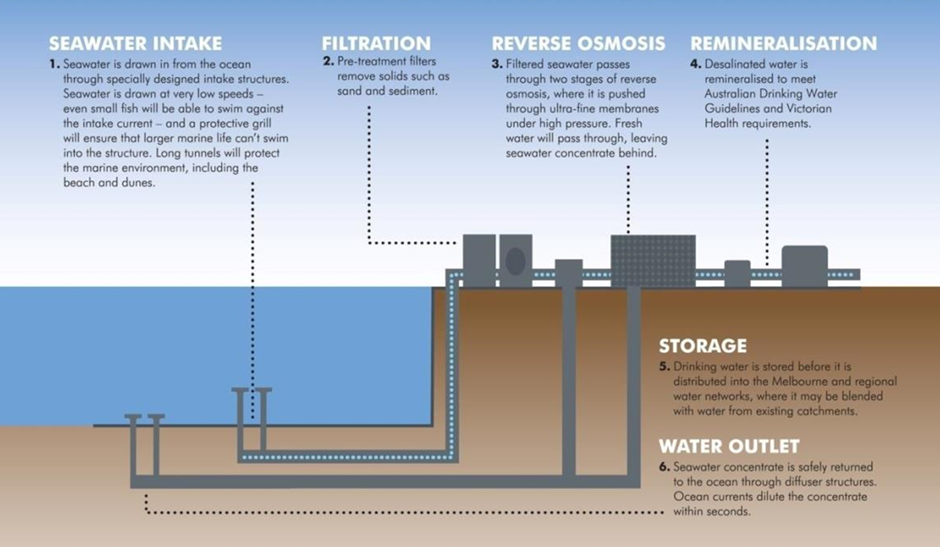
Located on Victoria’s Bass Coast near Wonthaggi, about 130km south-east of Melbourne, the plant draws seawater from Bass Strait and uses reverse osmosis to extract fresh water. The purified water is then remineralised and treated, rigorously tested, and transferred via a pipeline into the Victorian water network, supplying Melbourne, Geelong and connected regional communities.

The process is energy‑intensive, but the plant operates under one of the most comprehensive environmental frameworks applied to major infrastructure in Australia. Power use is fully offset through renewable energy certificates, marine discharge is continuously monitored, and the surrounding 225‑hectare ecological reserve has been progressively restored with millions of native plants and is maintained under the public-private partnership the plant operated under.

Desalination Plant Process (source Watersure)

How water orders work

Each year, the Victorian Government determines how much desalinated water is required based on independent advice from water authorities. Orders can range from zero to 150 gigalitres, depending on storage levels, demand forecasts and climate outlooks.

This flexible approach allows the plant to function as a strategic reserve, delivering water when it is needed, while remaining ready to scale at short notice. The 2026‑27 order represents the highest ever placed, reflecting both current conditions and forward risk management.

Victorian Desalination Plant Water Orders by Year


Planning for the future

Looking ahead, the Victorian Government has signalled the importance of expanding rainfall‑independent water sources as part of its long‑term Water Security Plan. This includes:

  • Planning for a fourth desalination stream at Wonthaggi, increasing capacity to 200 gigalitres per year, and
  • Investigating the potential for an additional desalination plant to support future population growth.

As Melbourne continues to grow, with current forecasts showing it will become Australia’s most populous city in the early 2030’s, and with increasingly variable climate conditions, these options reflect a positive shift toward proactive, system‑wide water resilience rather than reactive crisis response.


Ventia’s role behind the scenes

As a joint venture partner with SUEZ in Watersure, Ventia plays an integral role in operating and maintaining the Victorian Desalination Plant, keeping the plant safe, reliable and ready.

Ventia’s Engineering Services team has provided specialist support across:

  • Asset management and lifecycle planning
  • Condition monitoring of critical equipment
  • Engineering design for safety systems, electrical infrastructure and process analysers
  • Civil and structural engineering support for plant upgrades and renewals

This work is largely unseen by end users, but it is essential to ensuring the plant can operate safely, efficiently and in compliance with its strict regulatory and environmental obligations.

Ventia additionally plays a pivotal role in supporting essential water infrastructure throughout Australia and New Zealand, including:

  • Serving as a Regional Delivery Partner for Sydney Water through the Confluence JV with Downer, providing comprehensive design, construction, and maintenance services across the Northern region.
  • Delivering preventative, corrective, and reactive maintenance, as well as electrical, mechanical, and instrumentation services for Seqwater in the Brisbane region.
  • Partnering within the GCIS joint venture with Downer for the City of Gold Coast, offering asset lifecycle delivery services such as water and sewerage network maintenance.
  • Undertaking maintenance and capital works for Yarra Valley Water in Victoria.
  • Managing water and wastewater infrastructure for the Far North District Council in New Zealand.
  • Upgrading the Bundamba Wastewater Treatment Plant in Queensland to enhance flood resilience and accommodate population growth in the Ipswich area.
  • Upgrading the Burpengary East Wastewater Treatment Plant in Queensland to significantly increase treatment capacity and improve environmental outcomes by reducing nutrient discharge.

Infrastructure that proves its worth over time

The Victorian Desalination Plant was never intended to run continuously. It is an insurance policy, built to be there when Victoria needs it most.

This year’s full‑capacity operation shows why that investment matters. In a time defined by climate uncertainty, securing access to clean drinking water is not optional. It is foundational to liveability, economic stability and community resilience, and Ventia are proud of the role we play in ensuring it can deliver for Victorian communities. 


More about James